At 88 Miles Per Hour
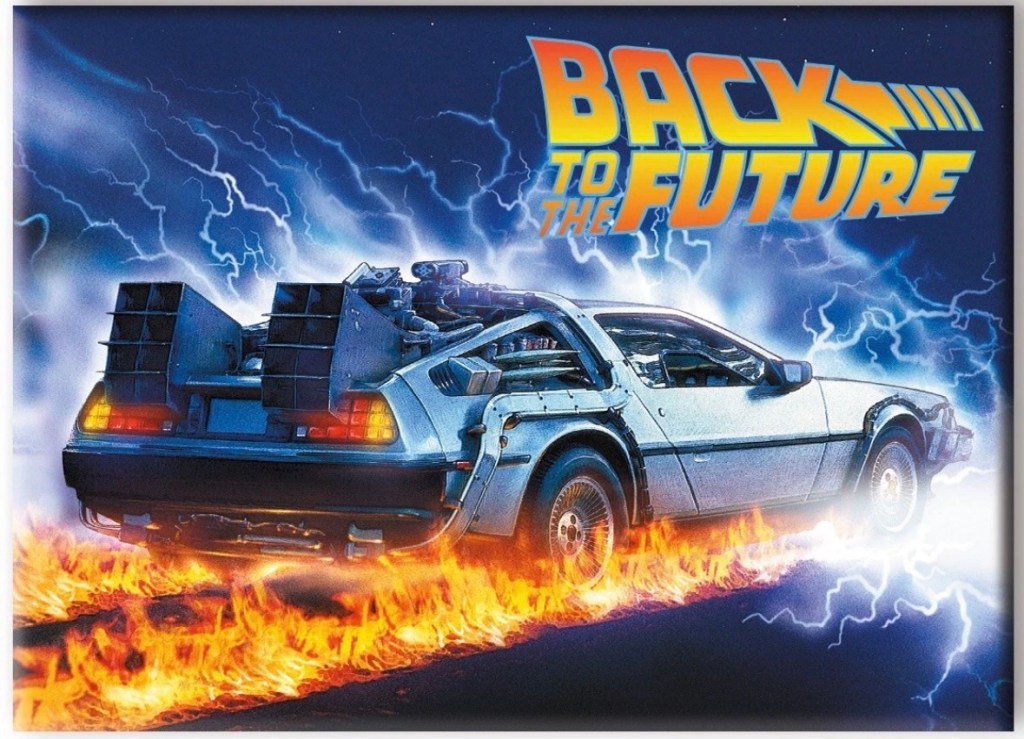
I used to attribute my goal of becoming an author to having been inspired by S.E. Hinton’s The Outsiders when I read it as a teenager. She herself was a teen when she published it, yet another source of inspiration for me. However, I have come to realize that my desire to write was sparked long before that, when I watched Back To the Future in 1985.
I was eight years old when I had the pleasure of viewing this film during its theater debut. Since then, I have rewatched it countless times, including when it was brought back to the big screen for its 25th anniversary. I notice something different upon each viewing, yet another charming thing about my favorite movie.
Having already released a memoir, I aspire to publish a novel in every major fiction genre including romantic suspense, crime, and science fiction.
This singular purpose has caused me to revisit what I appreciate so much about Back To the Future’s masterful storytelling by Robert Zemeckis and Bob Gale. I’m sure many articles have already dissected and analyzed this film, but I feel inspired to share my own take.
The whole opening scene, where the McFly family is having a meal together, is spring-loaded with points that come into play later in the movie. The mother reminiscing about her teen years provides the perfect opportunity to share a bunch of details in a short amount of time, without coming across as exposition. In a sleight of hand orchestrated by the director, the viewer is kept distracted by how humorously depressing the conversation is between these frumpy, down-on-their-luck working class people.
There’s a concept in writing which stipulates that if you introduce a gun into a scene, the gun must go off in a following scene, ideally sooner rather than later, because the reader is anticipating it.
That opening scene is a veritable arsenal of firepower. There is not a single moment that passes without value; each detail shared sets up a plot point or callback that will be key later in the movie.
Now, a gun is the kind of thing that would stick in the forefront of the reader’s consciousness, because we know how much damage it can cause. What’s genius about Back To the Future is that there are oodles of metaphorical guns, right from the very beginning, which the viewer doesn’t pick up on as being significant. These details completely slip under the radar.
For instance, Marty’s mother saying that their uncle didn’t make parole again, so they’ll have to eat the cake she made for him. Later, when Marty sees that uncle as a baby in a crib, he says to him, “Better get used to these bars, kid.”
You’ve got the mother dreamily telling her children about the moment she fell in love with George at the Enchantment Under the Sea dance, how he was hit by her dad’s car, and how she then nursed him back to health. All the while, her oblivious husband is watching a black and white TV show, The Honeymooners. When Marty sees this same episode in the 50’s, he calls it a rerun and tells the family he’s dining with that he’s seen it before. The family is mystified, saying, “What’s a rerun?”
When 1985 Doc Brown explains to Marty how the DeLorean can take them to any time period they want, he shows him how to use the interface, mentioning several random dates. Then he settles on 1955, the year he came up with the concept for the flux capacitor. That reminiscing provided a convenient place for the writers to insert a seemingly benign date. Yet, it plays to Marty’s advantage when he goes back in time to that very year, and is trying to enlist a younger Doc Brown’s assistance. That 1955 Doc doesn’t believe how Marty came to be there, and the only thing that convinces him otherwise is when Marty says he knows his friend conceived of the device after slipping on the toilet and hitting his head.
In an early scene, Marty is given a sheet of paper advertising a fundraiser for the clock tower, which was struck by lightning 30 years earlier. The date and time of the storm that rendered the clock non-functional are conveniently captured right there on that paper, which Marty saves because his girlfriend wrote her number on the back. The viewer forgets about this, because your attention shifts to the phone number, which at that point might as well have been written on a blank sheet of paper. That paper goes into Marty’s pocket, and ends up becoming one of the most important tools in the movie, coming into play to inform Doc of exactly when and where to expect the lightning strike needed to send Marty back to 1985.
Then of course, there’s the trouble caused by Marty’s interference in 1955 events which we know, from his mother’s reminiscence in 1985, had to take place in order for his parents to marry and have their three children.
When you see all these metaphorical guns being brought out later in the film, you aren’t expecting them. You weren’t waiting for them to resurface. Each one becomes a huge “Aha!” for the viewer. Some of them even turn into Easter eggs, such as the sign in the mall parking lot changing from “Twin Pines” to “Lone Pine” after Marty crashes into one of the trees in the 50’s, destroying it.
There are so many more things to unpack in this movie, like the theme of clocks and time being carried through from beginning to end, starting with the alarms in the many clocks in Doc Brown’s house all going off at once. It’s also arguably the only movie that convincingly handles the concept of time travel.
Truly, Back To the Future is a MasterClass on good story-writing. From that very first viewing, it was unknowingly stockpiling my budding writer’s brain with important storytelling conventions.
To grow as a writer, I’ve been availing myself of every video by John Matthew Fox on YouTube. I recommend this as the single most helpful writing tutorial out there. Beyond this, if you’re looking for inspiration in your own writing, I encourage you to watch Back To the Future again. You never know what will stand out to you on subsequent viewings.


You must be logged in to post a comment.