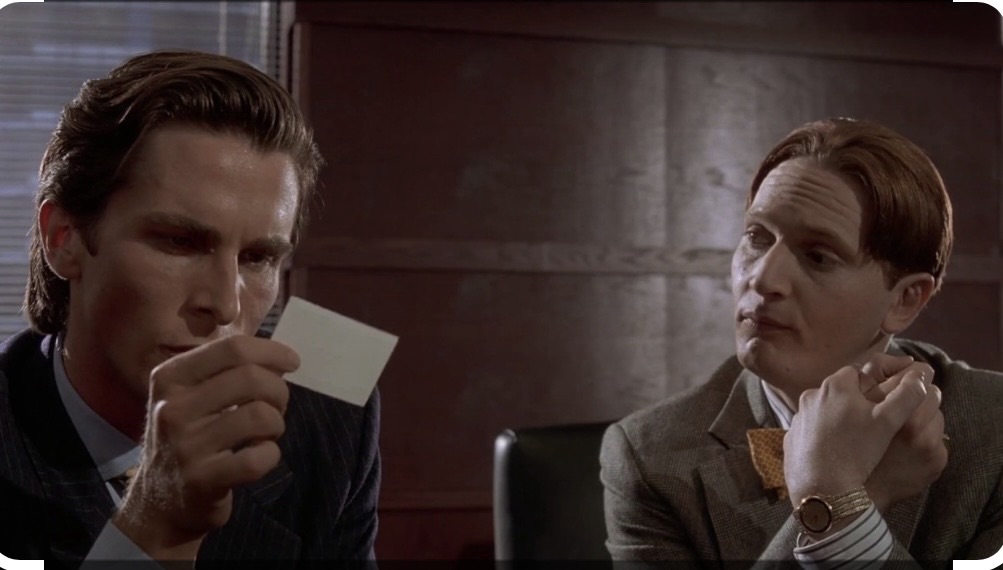
You know the scene in American Psycho, where Christian Bales’s character is sweating as he and his colleagues compare business cards? Each is bragging about their color choice – which all appear to be regular white cardstock. While that scenario was satirical, the envy is real.
As the author of a published memoir, I feel exactly what that character conveyed whenever I think about the opening lines of The Glass Castle, Part 2, “The Desert,” where Jeannette Walls’s chronological childhood story begins. These lines will never be topped: “I was on fire. It’s my earliest memory.”
I would sweat from envy if that memoir was set beside mine on a conference table. It feels wrong to be envious of these opening lines, when they represent a child’s jarring, problematic circumstances. But from a writing perspective, it’s a powerful hook. It draws the reader in immediately.
My first memory is nowhere near as interesting. I don’t even know exactly which one it is, of the several memories from when I was three years old. My left shinbone was fractured when my older sister, who was giving me a piggyback ride, toppled onto concrete with my leg pinned underneath her. But that’s a fuzzy recollection. The parts I remember clearly are wearing a cast and thinking I could no longer put pressure on my leg, so I regressed to crawling around the house. Most of all, I remember the cast being cut off. The terrible whining of the tiny, jagged-toothed saw blade. My flustered mother pinning me down on the exam table so that the doctor could remove the cast. Me screaming in terror, certain that my leg would be taken off along with it. Still, this pales in comparison to being on fire.
Jeannette Walls’s dress caught fire while she was cooking her own meal at the age of three. It’s layer upon layer of incredibly profound and heartbreaking details.
I published my coming of age memoir, Dismantle, in 2024. I am pleased with how it turned out. I did the very best I could with the subject matter. But it is a messy story with no closure. Readers, of course, prefer closure; to have everything wrapped up in a bow at the end. My book is not the sort that could become required reading in schools, as The Glass Castle did.
The topics of family, poverty, and mental illness, addressed in The Glass Castle, are a universal human experience. My book contains R-rated material, not because I wished to produce something risqué, but because that was my lived experience with out-of-control parents. It limits the audience because not everyone can comfortably handle the subject matter of a family that dysfunctional. In fact, I have a friend who had to stop reading after the first chapter because it made her too sad to picture my childhood that way.
It’s not ideal to write a book that causes the faint of heart to put it down. But the recipe Jeannette Walls employed keeps you hooked from beginning to end. You’re rooting for those kids. You want to see them rise above their circumstances and succeed. So even when the subject matter is tough, you keep turning the page, because the author does such an artful job describing everything in a neutral voice.
As a writer, you can always learn something more about the craft and get better with practice. But when you’re writing something as personal as a memoir, you’re stuck with the truth, whether that be good, bad, or ugly. Fortunately, you can write just one memoir, and then go on to write anything you want in fiction.


You must be logged in to post a comment.